Sachin Tendulkar’s Ranji Trophy journey reads like a masterclass in consistency and competitive spirit. Across 39 matches, the Mumbai maestro lost only once—an astonishing statistic that underlines his impact at the domestic level. In that lone defeat, the 1991 final against Kapil Dev’s Haryana, he still stood tall with scores of 47 and 96. Tendulkar was part of 23 wins and 14 draws, shaping Mumbai’s dominance with the same determination he later showed on the world stage. Even more remarkable, his seasonal batting average never dipped below 56.5, except in 1998–99 when he batted just once.
Overall, Tendulkar’s Ranji Trophy numbers look almost unreal: 4,281 runs in 38 matches at an average of 87.3, including 18 centuries and 19 fifties. His 1994 season remains one of the greatest in domestic cricket history—five centuries in seven innings, capped by twin hundreds (140 and 139) in the final against Punjab at the Wankhede Stadium. And then came the unforgettable 1999–2000 semifinal, where he crafted his highest Ranji score, a majestic 233 against Tamil Nadu*. With Mumbai still 43 runs behind and eight wickets down, Tendulkar shielded the tail and scored every one of the next 44 runs needed for the lead, sealing it with a rare fist-pump celebration.
Adbhut Brand Studio | Utsav
advertisement

advertisement

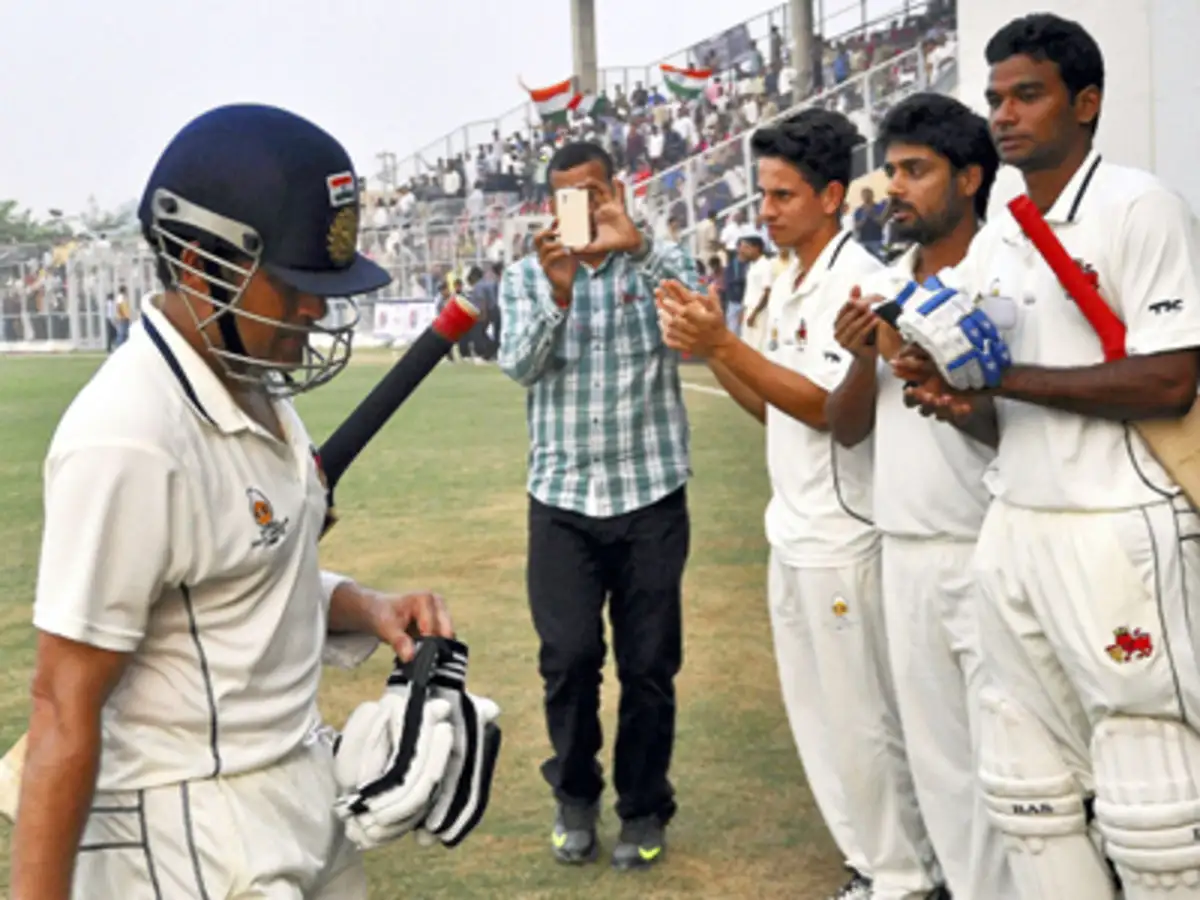
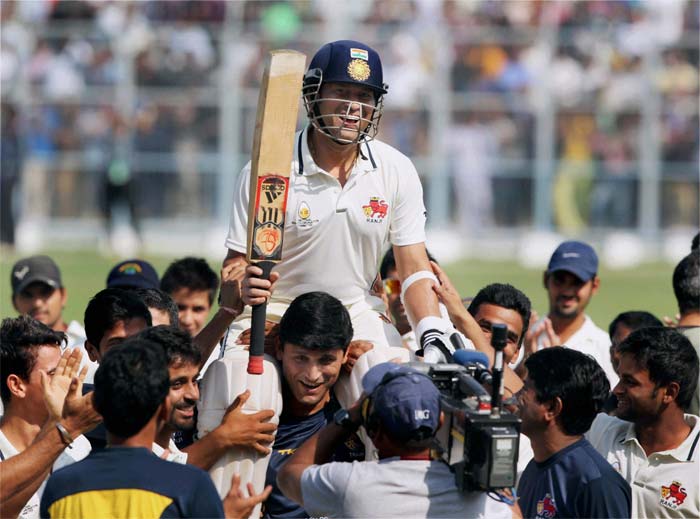
His Ranji career had begun in 1988 in equally poetic fashion—a century on debut at age 15, against Gujarat. Twenty-five years later, on this very day in 2013, the legend played his final Ranji match, again against Haryana. As he walked out to bat at age 40, a sea of fans roared, “Cricket ke Bhagwaan ki jai!” Zaheer Khan even missed his run-up amid the thunderous chants. Tendulkar simply smiled and told the crowd, “Zaheer thoda ghabra raha hai aapki awaaz se”—and the stadium burst into laughter.
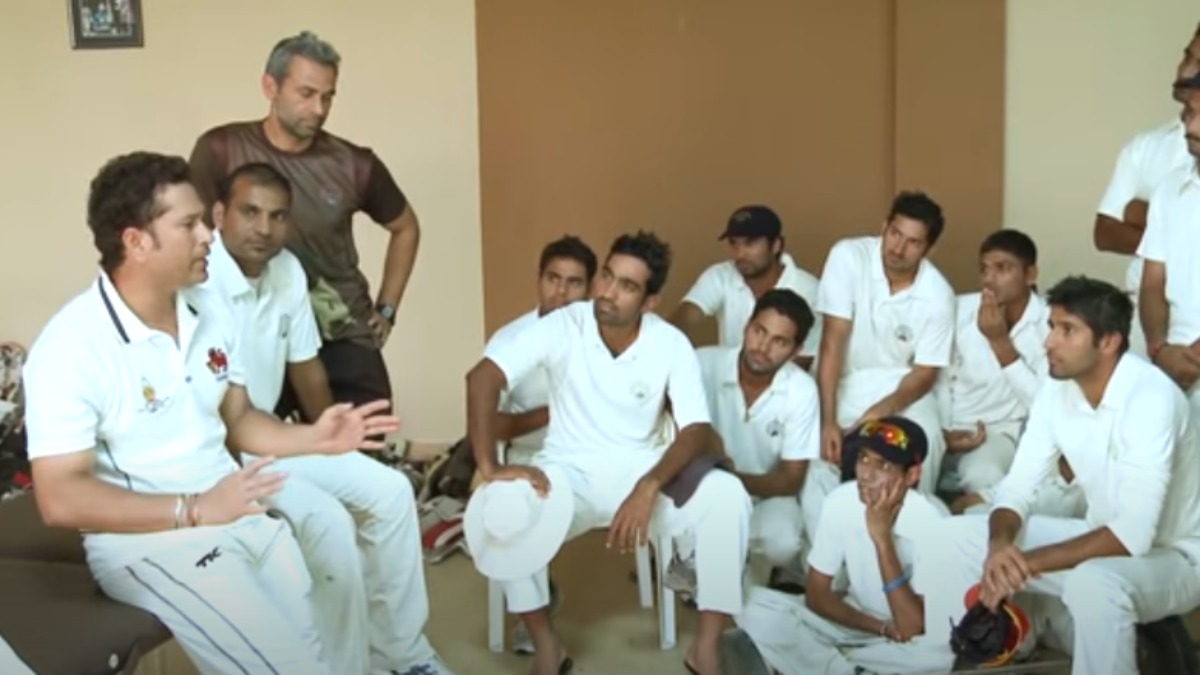
He scored a graceful 79 to guide Mumbai to victory*, but what followed said even more about the man than the player. Instead of heading straight to celebrations, Sachin quietly walked to Haryana’s dressing room to congratulate them. Then he posed for group photos—not with celebrities, but with policemen, volunteers, hotel staff, helpers, and everyone who had served behind the scenes. Every fan in the long queue received a patient smile and a picture. That’s Tendulkar—greatness wrapped in humility.
Adbhut Brand Studio | Utsav
advertisement
advertisement
Tony Greig once said, “There’s Tendulkar, then there’s daylight, and then the rest.” For India, Sachin was more than numbers—he was emotion, routine, reverence. People paused life for his batting; judges paused courtrooms to check his score. Even princes like Ajay Jadeja stood in salute. Because when it comes to Tendulkar, even royalty bows. His records immortalize his genius, but the stories immortalize his soul. India didn’t just watch him play—India lived him.