Actor-politician Ramya’s social media reaction to Supreme Court remarks on stray dogs has ignited a fierce online debate, blending issues of public safety, provocative analogy and political.

Actor-turned-politician Divya Spandana, better known as Ramya, has once again found herself at the centre of a digital storm, this time over her reaction to recent Supreme Court observations on stray dog attacks. What started as a judicial discussion on public safety and animal behaviour rapidly morphed into a full-blown social media controversy after Ramya attempted to draw a provocative analogy. Her post went viral within hours, sparking fierce debate over logic, responsibility and the boundaries public figures should observe when commenting on sensitive issues online.
Responding to the court’s remark that it is impossible to predict when a dog might bite, Ramya questioned whether unpredictability alone can justify extreme preventive measures. She compared this uncertainty to the impossibility of reading a man’s mind to foresee crimes such as rape or murder, asking whether that logic would warrant imprisoning all men pre-emptively. The comparison, sharp and deliberately unsettling, instantly divided opinion and pushed the conversation far beyond stray dog policy into moral and political territory.
Adbhut Brand Studio | Utsav
advertisement

advertisement

Critics accused Ramya of creating a false equivalence between animal instinct and human criminal intent. They argued that crimes involve conscious choice, legal accountability and punishment, while animals act without moral agency. Many also found her reference to violent crimes insensitive, especially at a time when public anxiety is high due to reported stray dog attacks. For these users, the analogy trivialised both the trauma of victims and the complexity of managing urban animal populations.
Supporters, however, insisted that Ramya’s words were being interpreted in bad faith. According to them, her intent was not to equate dogs with criminals but to question the logic of collective punishment and fear-driven policymaking. They argued that her post highlighted the dangers of reacting emotionally rather than addressing systemic failures, such as poor implementation of animal birth control and vaccination programmes by civic bodies. In their view, outrage overshadowed the underlying policy critique.
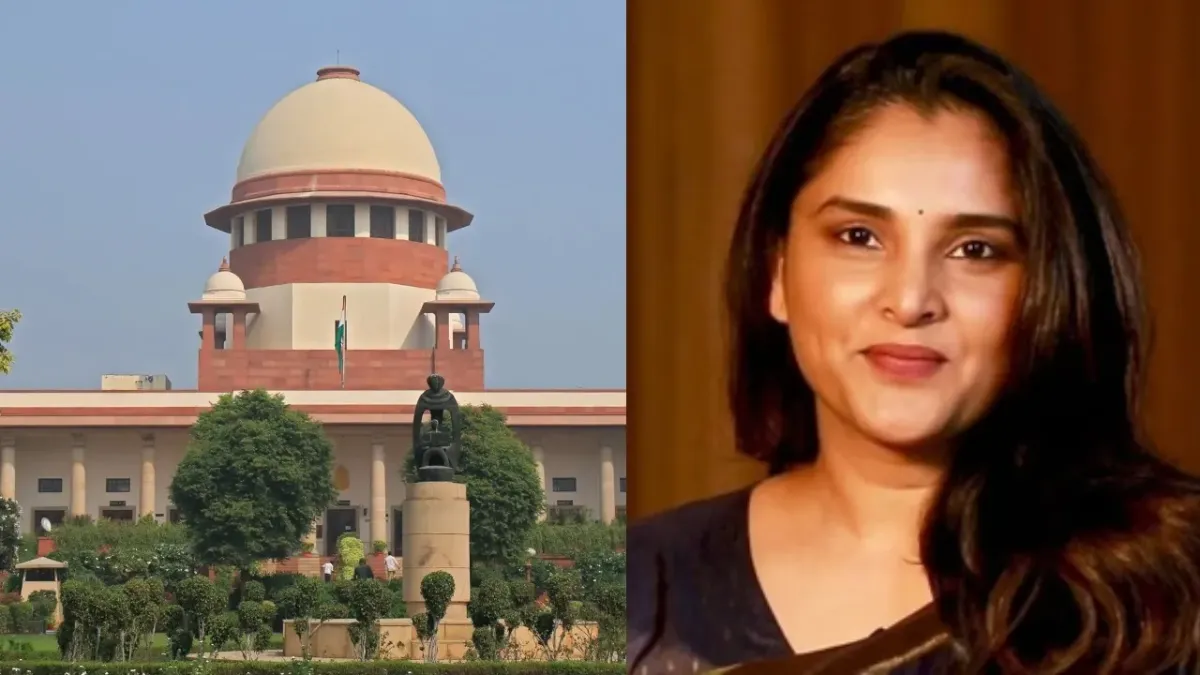
Meanwhile, the Supreme Court’s remarks came in the context of ongoing hearings on stray dog management amid rising attack incidents. The court has repeatedly pointed to the unpredictability of animal behaviour and the risks it poses in public spaces, noting that a dog’s state of mind cannot be reliably assessed. It has also acknowledged arguments that dogs may sense fear and react aggressively. Ramya’s intervention, controversial as it is, has ensured that the debate now extends beyond dogs to how society balances safety, empathy and reason in public discourse.