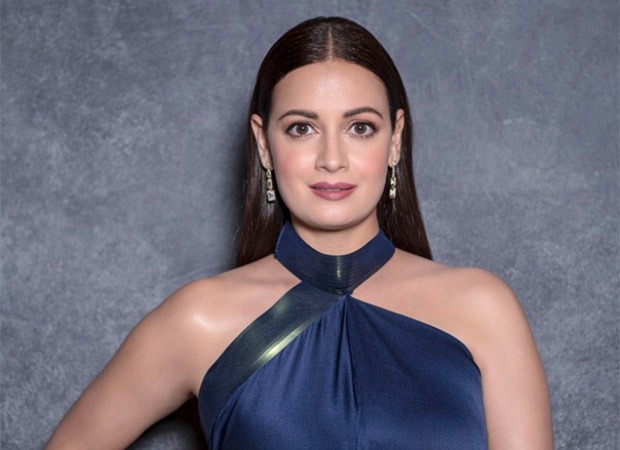
Bollywood’s glam bubble just cracked—Dia Mirza fired a bold shot at age-gap romance hypocrisy, calling out an industry that worships aging heroes but sidelines powerful, evolving women.

Bollywood’s shimmering façade often hides the cracks beneath, and Dia Mirza just shone a spotlight on one of its most persistent fractures—age inequality. Speaking with the calm fire she’s known for, the actor declared that stepping into her 40s hasn’t dimmed her craft; it has sharpened it. She described this phase of her life as her most “focused and powerful,” yet the industry around her remains stubbornly unchanged. In an ecosystem that loves evolution as long as it’s cosmetic, her truth lands like a necessary jolt.
Dia’s statement slices straight into the heart of a pattern Bollywood has long normalised: age-gap romances masquerading as cinematic chemistry. With disarming clarity, she questioned why women like her are routinely paired with male co-stars in their late 50s, 60s, even 70s—relationships framed as if they exist on equal romantic footing. It’s not the performances she challenges, but the mindset that repeatedly casts men as evergreen lovers while quietly shrinking the space afforded to women.
Adbhut Brand Studio | Utsav
advertisement

advertisement

Her words unmask a double standard the industry rarely acknowledges. While older men continue headlining youthful love stories, audiences will almost never see a 60- or 70-year-old woman opposite a leading man in his 40s playing a contemporary romantic lead. That imbalance isn’t a coincidence; it’s a bias camouflaged as convention. By calling it out, Dia exposes the unwritten rule that only men are allowed to age visibly and still be embraced as desirable.
The issue, as she powerfully framed it, isn’t credibility—it’s perception. “That pairing simply doesn’t exist for women,” she emphasized, and the truth echoes far beyond casting rooms. It reflects an industry that continues to struggle with imagining women as relevant, desirable, layered, or central once they cross an invisible age threshold. Her critique isn’t an indictment of male actors, but of a cinematic culture that forgets women long before they fade.
Dia’s closing sentiment lands with the resonance of a manifesto. The problem, she insists, isn’t men aging; it’s women being denied the right to age with visibility, dignity, and complexity on screen. In an era hungry for authenticity and reinvention, her statement isn’t just commentary—it’s a challenge. A call for a Bollywood where women aren’t edited out of their own evolution, but celebrated for every season they grow into.