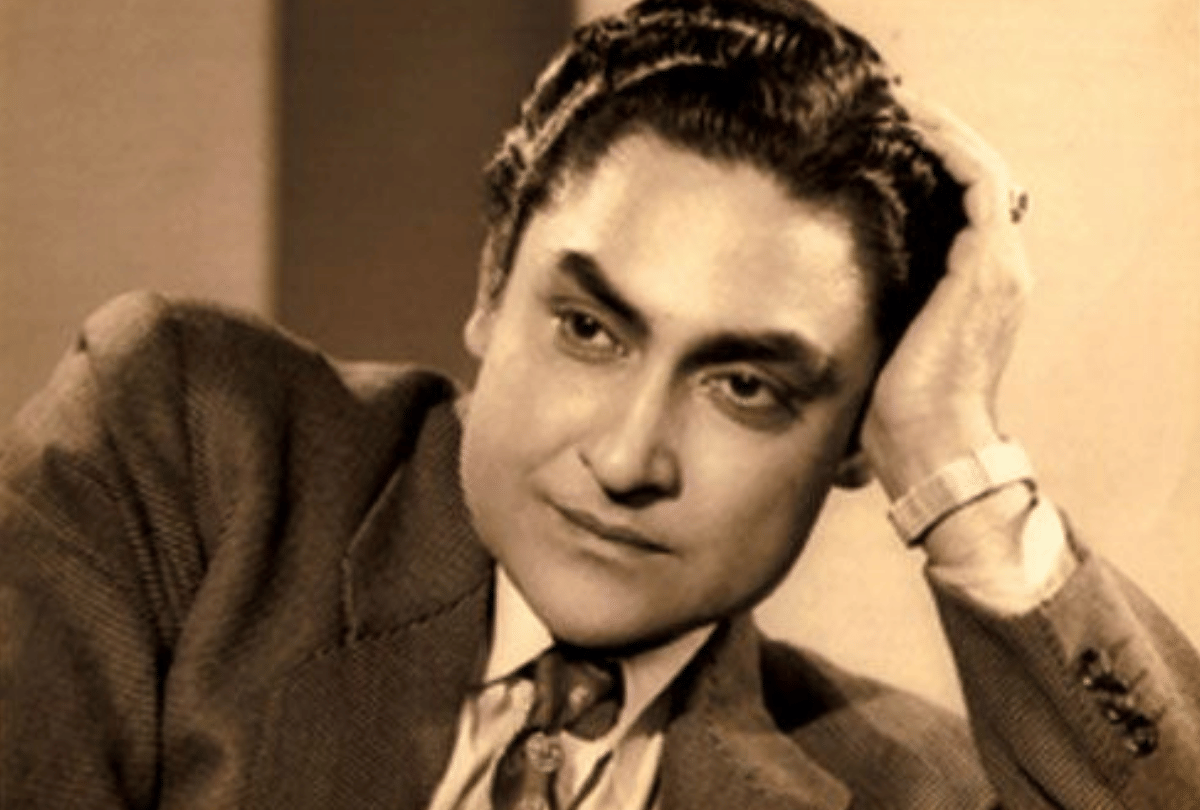
On the illustrious canvas of Indian cinema, few names shine with as much timeless grace and grandeur as Ashok Kumar, born Kumudlal Ganguly on 13 October 1911 in Bhagalpur. Often hailed as the first superstar of Hindi cinema, he redefined stardom with an unparalleled blend of charm, realism, and versatility. His portrayal of the anti-hero in the 1943 blockbuster Kismet was revolutionary, heralding a new era in storytelling. Over his sprawling career, Kumar not only reigned as a leading man but gracefully transitioned into powerful character roles, becoming the first actor to reinvent himself in Indian film history. His contributions were duly recognized with the Dadasaheb Phalke Award in 1988 and civilian honours like the Padma Shri (1962) and Padma Bhushan (1999).
Kumar hailed from the culturally rich Ganguly family, a lineage that would come to dominate Indian cinema for decades. His siblings included Anoop Kumar and the legendary singer Kishore Kumar, while his sister, Sati Devi, was married into the influential Mukherjee film family. Despite his towering fame, Ashok Kumar remained deeply rooted in traditional values. Married young to Shobha, theirs was a serene, middle-class household. His children followed diverse paths — from son Aroop, who briefly dabbled in films, to daughter Preeti Ganguly, a beloved comedienne. His granddaughter Anuradha Patel and step-great-granddaughter Kiara Advani continue the cinematic legacy.
Adbhut Brand Studio | Utsav
advertisement

advertisement

Though he studied law at Presidency College in Kolkata, cinema called him to Bombay where, quite by chance, he made his debut in 1936 with Jeevan Naiya. It was Achhut Kanya that marked his arrival as a star. The next decade cemented his dominance with a string of hits including Kangan, Bandhan, and Jhoola. With Kismet, Ashok Kumar became a phenomenon. The film shattered box office records, ran for 184 weeks in Kolkata, and established him as the undisputed face of Indian cinema in the 1940s.
The 1950s witnessed him evolve both as actor and producer. Mahal (1949) introduced horror to Hindi screens, catapulted Madhubala to stardom, and gave Lata Mangeshkar her defining song. From Samadhi, Sangram, and Afsana to Parineeta and the cult classic Chalti Ka Naam Gaadi, Ashok Kumar was unshakeable even as new heroes emerged. His collaborations with legends like Meena Kumari, Nargis, and his brothers delivered both artistic merit and commercial success, underscoring his versatility and enduring appeal.
Ashok Kumar passed away in Mumbai on 10 December 2001, leaving behind not just a treasure trove of cinematic gems, but a legacy that lives on through generations of actors and storytellers. A pioneer, a patriarch, and a performer par excellence — he remains, to this day, the eternal Dadamoni of Indian cinema.