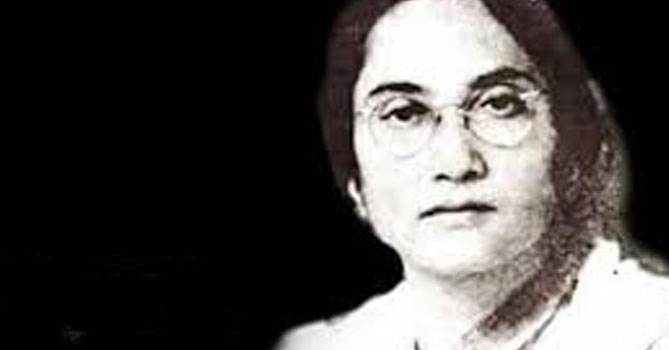
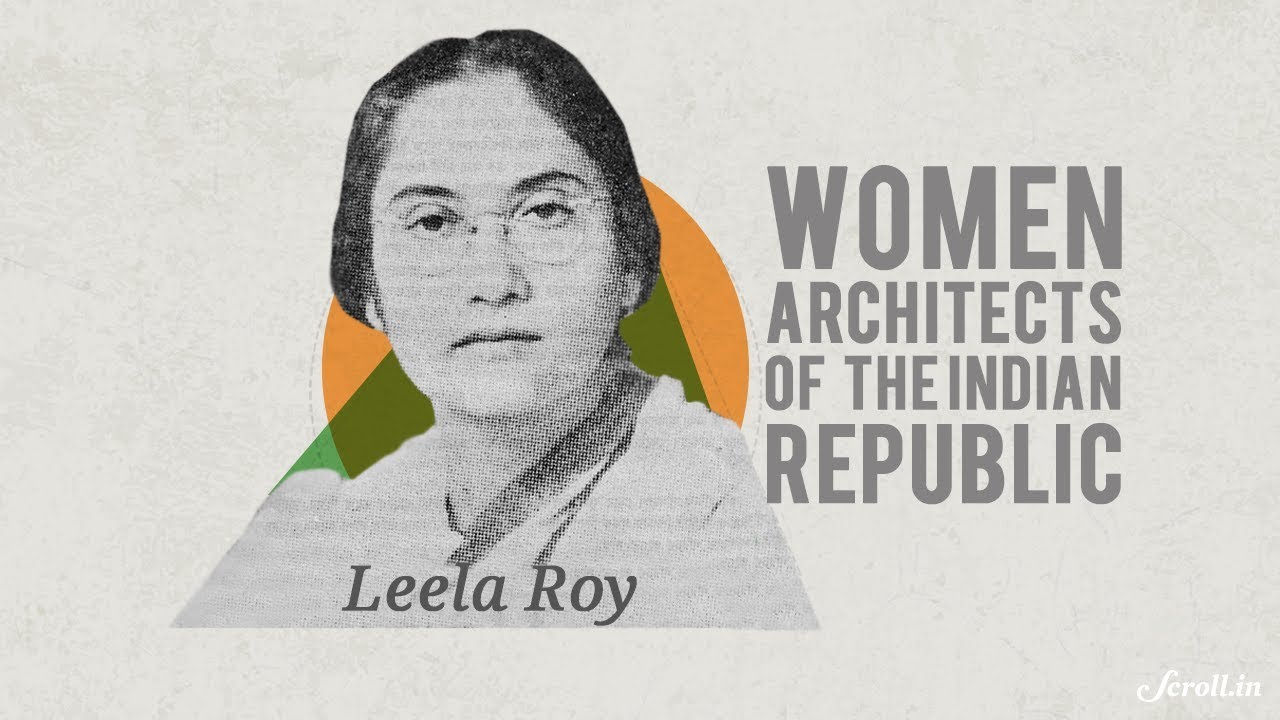
Leela Roy was a fearless revolutionary who dedicated her life to empowering women, serving the oppressed, and shaping India’s freedom movement with courage, vision, and sacrifice.

Born on 2nd October, the same day the nation celebrates Mahatma Gandhi, Leela Roy—also known as Leela Roy Nag—remains one of India’s most courageous yet understated revolutionaries. While history often echoes louder with the names of towering leaders, her legacy whispers a powerful truth: patriotism is not about fame or position, but about fearless service and unwavering sacrifice. In Bengal and beyond, 2nd October is not only Gandhi Jayanti—it is also Leela Jayanti, a day that deserves equal reverence for a woman who gave her entire being to the nation.
Leela Roy belonged to that rare breed of patriots who sought nothing for themselves. She dedicated her life to the poor, the oppressed, and the countless refugees of Bengal—especially during the painful years of colonial exploitation, partition, and communal unrest. Her revolution was not limited to resistance against the British Raj; it extended to rebuilding shattered lives with dignity. Where there was despair, she brought hope. Where there was fear, she planted courage. Her service was silent but transformative, rooted deeply in compassion and action.
Adbhut Brand Studio | Utsav
advertisement

advertisement

A visionary far ahead of her time, Leela Roy believed that India’s freedom was incomplete without the empowerment of its women. Through organizations like Sree Sangha and Deepali Sangha, founded in 1923, she created spaces where women from all social backgrounds could rise. They were trained in handling arms, making bombs, and distributing nationalist literature—yet they were equally encouraged to pursue education, healthcare, and vocational skills. This freedom of choice was revolutionary in itself. Influenced by thinkers like Rabindranath Tagore and Acharya Prafulla Chandra Ray, she envisioned women not as supporters of change, but as equal architects of the nation.
Her activism began early. In 1921, while still a university student, she championed women’s suffrage in Bengal. A year later, during the devastating North Bengal floods of 1922, she worked tirelessly in relief operations alongside Subhas Chandra Bose. These experiences strengthened her resolve to merge politics with public service. In 1931, she launched Jayasree Patrika, a powerful platform written by and for women, nurturing a bold generation of nationalist voices.
A founding member of the All India Forward Bloc, she later became the only woman from Bengal elected to the Constituent Assembly in 1946. Yet when Partition threatened her principles, she chose resignation over compromise. Leela Roy’s life stands today as a radiant testament to moral courage, visionary leadership, and selfless devotion—an eternal reminder that true greatness lies in service to humanity.