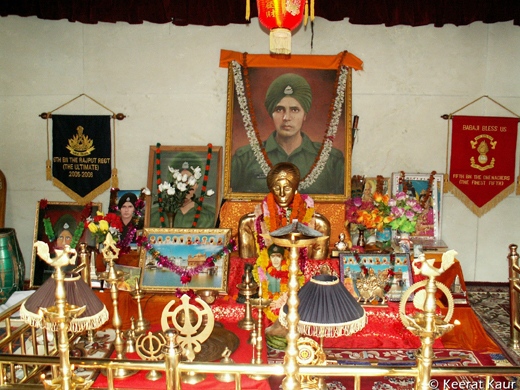
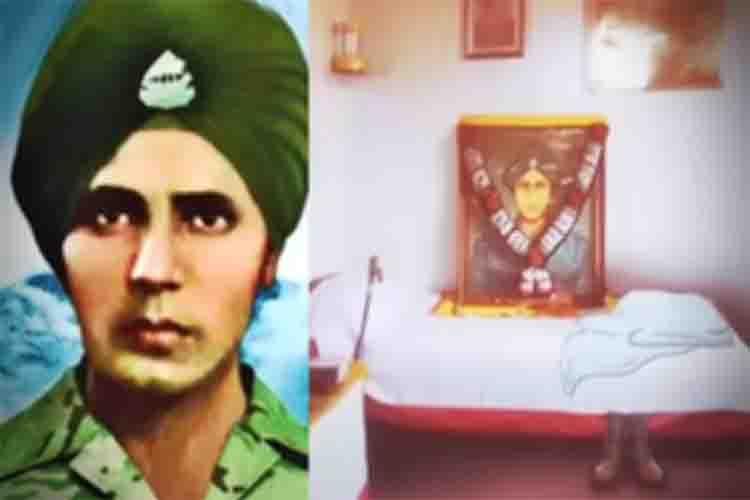
At the freezing, snow-swept heights of Nathu La, where oxygen is scarce and danger breathes with every gust of icy wind, the Indian Army stands as the nation’s first tribunal of courage. Here, fear is cross-examined daily, and patriotism delivers its verdict without hesitation. Soldiers know that survival is uncertain, but duty is absolute. In this brutal courtroom of nature and conflict, one name echoes like a timeless oath — Baba Harbhajan Singh. Not a myth, not just a memory, but a symbol of faith that strengthens morale when bodies weaken. In silence deeper than the snow itself, Indian soldiers feel watched over, guided, and protected by a force born of supreme sacrifice and undying devotion to the tricolour.
On 4 October 1968, Sepoy Harbhajan Singh of the Punjab Regiment was only 22 years old, carrying supplies through treacherous mountain passes. Fate struck cruelly as he slipped into a gorge, swallowed by snow and icy waters. The nation lost a soldier, but destiny chose to create a guardian. When his body was revealed through repeated dreams to fellow soldiers, it felt less like coincidence and more like a command from beyond. The recovery of his remains exactly as foretold transformed grief into belief. Harbhajan Singh did not merely die in uniform; he etched his loyalty into the soul of the Indian Army, proving that a soldier’s duty does not end with the last breath.
Adbhut Brand Studio | Utsav
advertisement

advertisement

What followed defied conventional logic but strengthened battlefield faith. Soldiers reported being awakened from negligent sleep, patrols sensed an unseen presence, and even Chinese troops acknowledged sightings of a lone rider on a white horse. More astonishing were the warnings — dreams in which Baba Harbhajan alerted Indian officers of impending attacks. In a world governed by strategy and intelligence, this spiritual vigilance became a shield of confidence. Courage multiplied when soldiers believed that one of their own still stood guard. In the tribunal of war, belief itself became a weapon, and Captain Harbhajan Singh emerged as its silent commander.
The Indian Army, a force rooted in tradition and honor, recognized what logic could not dismiss. Harbhajan Singh was promoted, rank by rank, to honorary Captain. His uniform is maintained, his shoes polished, his bed prepared — not as superstition, but as respect. Baba Mandir near Nathu La stands as a living reminder that sacrifice earns immortality. The annual ritual of granting him leave, complete with railway reservations and escorts, reflects an institution that understands morale is as critical as ammunition. This is not blind belief; it is disciplined faith that inspires courage in the harshest conditions.
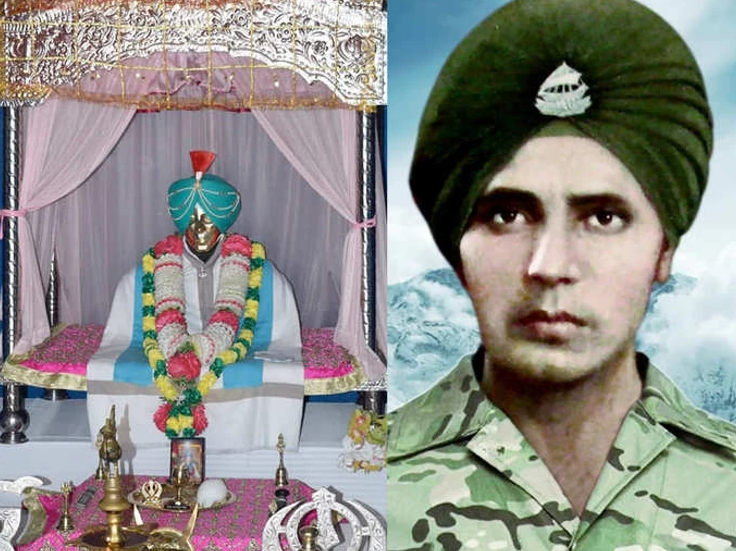
In an age obsessed with technology and skepticism, Baba Harbhajan Singh’s story reminds India that the nation is protected not only by weapons, but by values. Patriotism, sacrifice, and duty are forces no enemy can measure. At 14,000 feet, where death is a step away, soldiers trust that Baba watches over them. Real heroes do not retire, and true service does not end at death. Captain Harbhajan Singh stands as a motivational beacon for every Indian — proof that love for the motherland can conquer even mortality. A fearless salute to the soldier who still guards our borders.