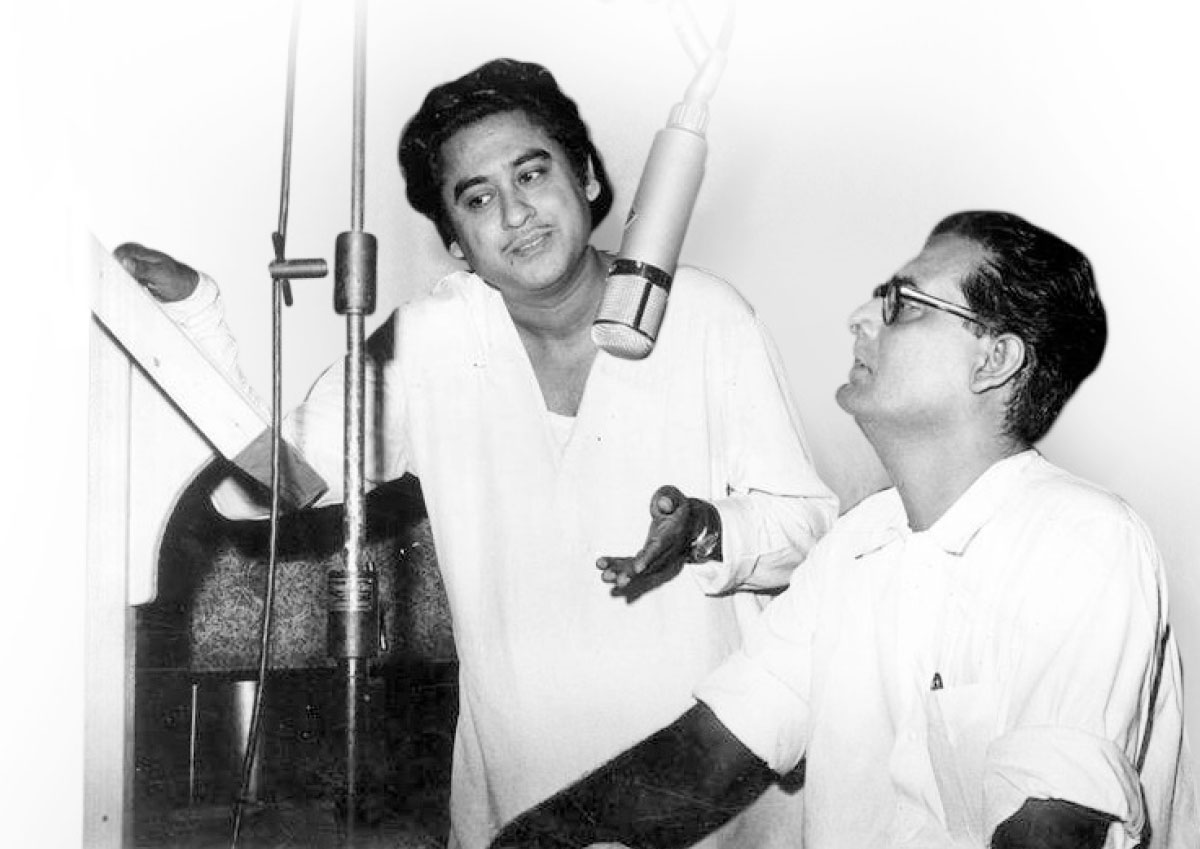
If the history of Bengali music were a star-studded galaxy, then the Megaphone Company would shine as its unwavering Pole Star. And it was around this Pole Star that a once-in-a-lifetime cosmic scene unfolded—where three legends aligned on a single orbit: the unpredictable superstar Kishore Kumar, the timeless melody-magician Hemanta Mukhopadhyay, and the quiet but visionary producer Kamal Ghosh. The journey begins far earlier, in 1946, when riots tore through Calcutta and forced young Kamal to take charge of Megaphone. What began as a responsibility soon bloomed into a lifelong romance with music—one that made him a silent witness to Bengal’s golden musical era.
Kamal Ghosh saw up close the many eccentric, colourful shades of Kishore Kumar’s life. Although Kishore recorded only a handful of songs for Megaphone, each one was a mega-hit. Then came 1980, when the phone rang unexpectedly in the Megaphone office—and on the other end was Kishore himself, summoning Kamal to Bombay. Already at the peak of fame as an HMV artiste, Kishore stunned him by declaring, “This time I’m singing Puja songs for your company. Agreed?” For Kamal, it felt like the heavens had opened. Instantly he wished for only one composer—Hemanta Mukhopadhyay, the only man who could weave that emotion into unforgettable melodies.
Adbhut Brand Studio | Utsav
advertisement

advertisement

But destiny loves drama. Hemanta was seriously ill and initially laughed off the proposal, saying, “Kishore promises and never appears! Why make me work for nothing again?” Yet Kamal’s persistence melted his resistance, and soon Hemanta was crafting tunes from his sickbed. Four masterpieces were born—songs that would later define an era. And like a true film sequence, Kamal carried 1.5 kilos of Kolkata’s famous yoghurt to Bombay, which Kishore discovered instantly, demanding to eat it before recording. Despite Kamal’s fears, he laughed, “Yoghurt makes my singing even better!”
At Mehboob Studio the next day, Kishore arrived with his divine voice entirely intact. Hearing that a frail Hemanta was coming, Kishore didn’t hesitate—he personally went to the gate to receive him. Witnessing one legend honour another left everyone speechless. The recordings began, and though Hemanta and sound engineer Robin Chatterjee approved the first takes, Kishore wasn’t satisfied. Only when his second attempt gave everyone goosebumps did he smile. In just two days, all four songs were completed and soon released on a shiny black 45 RPM record.
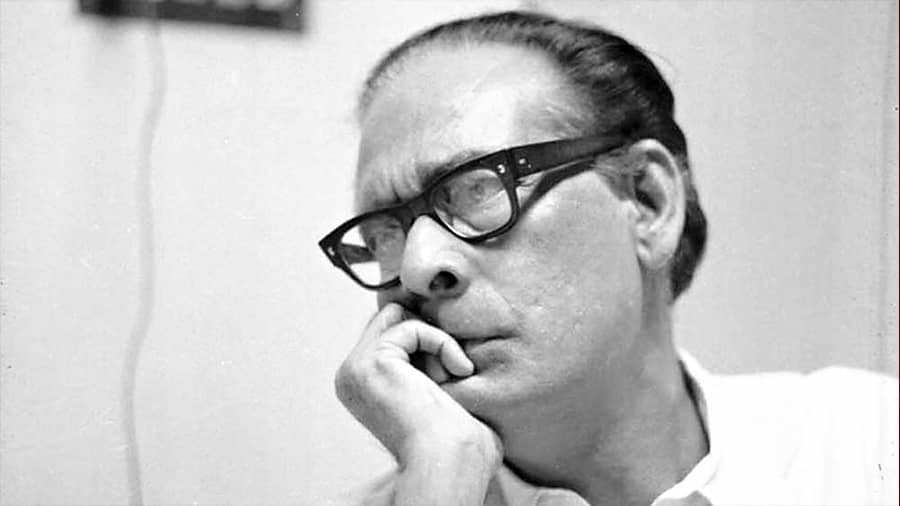
The result? A musical storm. The records smashed sales expectations and created new history during Puja 1980. Kishore returned again the next year, gifting Megaphone another set of unforgettable Bengali hits. Today, the legends are gone, the adda is gone, even the yoghurt-filled mischief is gone—but whenever these songs play, through a gramophone needle or a laser beam, it feels like they are still here. This story is not just about a record label—it is about passion, respect, and the golden moment when two musical giants stood on the same line, turning it forever into gold.