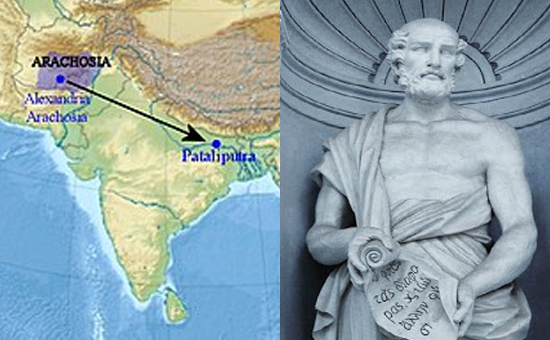
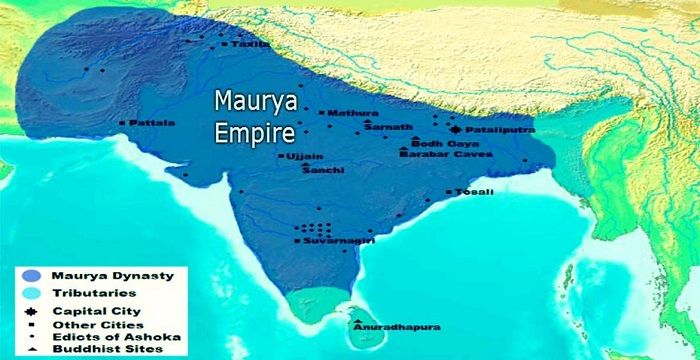
A recurring claim insists that Megasthenes never visited Pataliputra and that the Greek sources are too secondary to confirm Chandragupta Maurya or Chanakya. It sounds bold — even revisionist — but collapses instantly under scrutiny. Far from being vague or second-hand, the classical evidence for Megasthenes’ presence in the Mauryan capital is unusually strong by ancient standards. When the textual, linguistic and archaeological layers are viewed together, the case becomes almost unshakeable.
The argument that Indica is unreliable because the original text is lost misunderstands how ancient literature survives. Most classical works exist only in fragments, yet are accepted because they are quoted widely and consistently. Megasthenes is one of the best-preserved cases: Strabo, Arrian, Diodorus, Curtius, Pliny and Plutarch all quote or summarise him in detail, producing a dense, mutually reinforcing record. In classical scholarship, this degree of preservation is exceptional, not deficient. The idea that Megasthenes’ account is “too fragmentary” simply reflects outdated assumptions, not current historical method.
Adbhut Brand Studio | Utsav
advertisement

advertisement

Linguistically, the identification of Palibothra with Pataliputra is secure. Greek phonetics naturally turned Pāṭaliputra into Palibothra/Palibotra, just as Chandragupta became Sandrocottus and Bindusara (Amitrakhāda) became Amitrochates. The supposed confusion of the Prasii of Magadha with an Indus tribe stems from a nineteenth-century mistranslation; scholars now show the Greek text referred instead to the Patri/Parrhasii of the Paropamisadae. Once this correction is applied, every Greek geographical notice aligns neatly with the eastern Gangetic world described in Indian records.
Megasthenes’ city description further seals the case. Palibothra appears as a vast rectangular capital at the confluence of the Ganga and the Erannoboas — accurately understood as the Son river, not the Yamuna, which Greeks consistently call Diamouna. His distance of roughly two hundred stadia matches the Mauryan-era Ganga–Son meeting point west of modern Patna. Archaeology at Kumrahar and Bulandibagh reveals wooden palisades, fortified embankments and a great pillared hall, all precisely reflecting his descriptions. Text and excavation rarely align so tightly in ancient history.
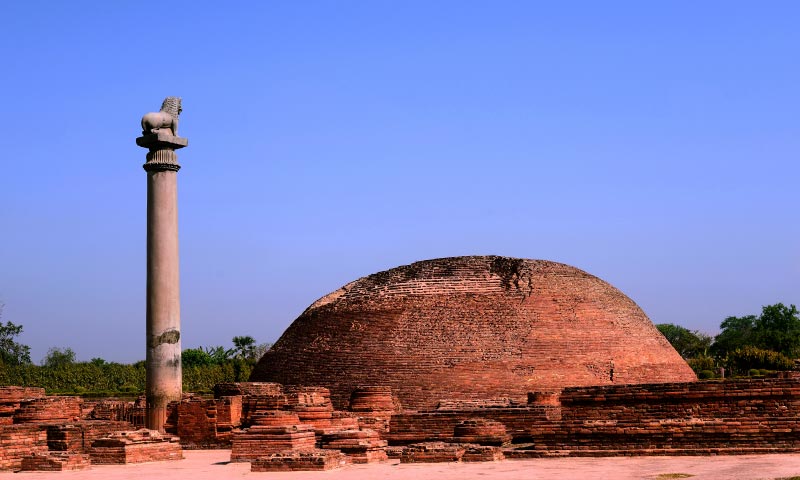
Even without Megasthenes, Greek–Mauryan synchronisms independently confirm Chandragupta Maurya. Seleucus Nicator fought him, made a treaty, offered a daughter in marriage and received five hundred war elephants — the very elephants that changed the Battle of Ipsus. Plutarch’s note that Chandragupta overthrew the Nanda cannot fit any Gupta-era king. These events come not from Indica but from well-documented Hellenistic political history. Claims that Megasthenes never visited Pataliputra survive only through outdated readings, linguistic confusion and selective skepticism. The reality is simple: Megasthenes did visit Pataliputra, he did meet Chandragupta, and his testimony remains one of the cornerstones of Mauryan history.