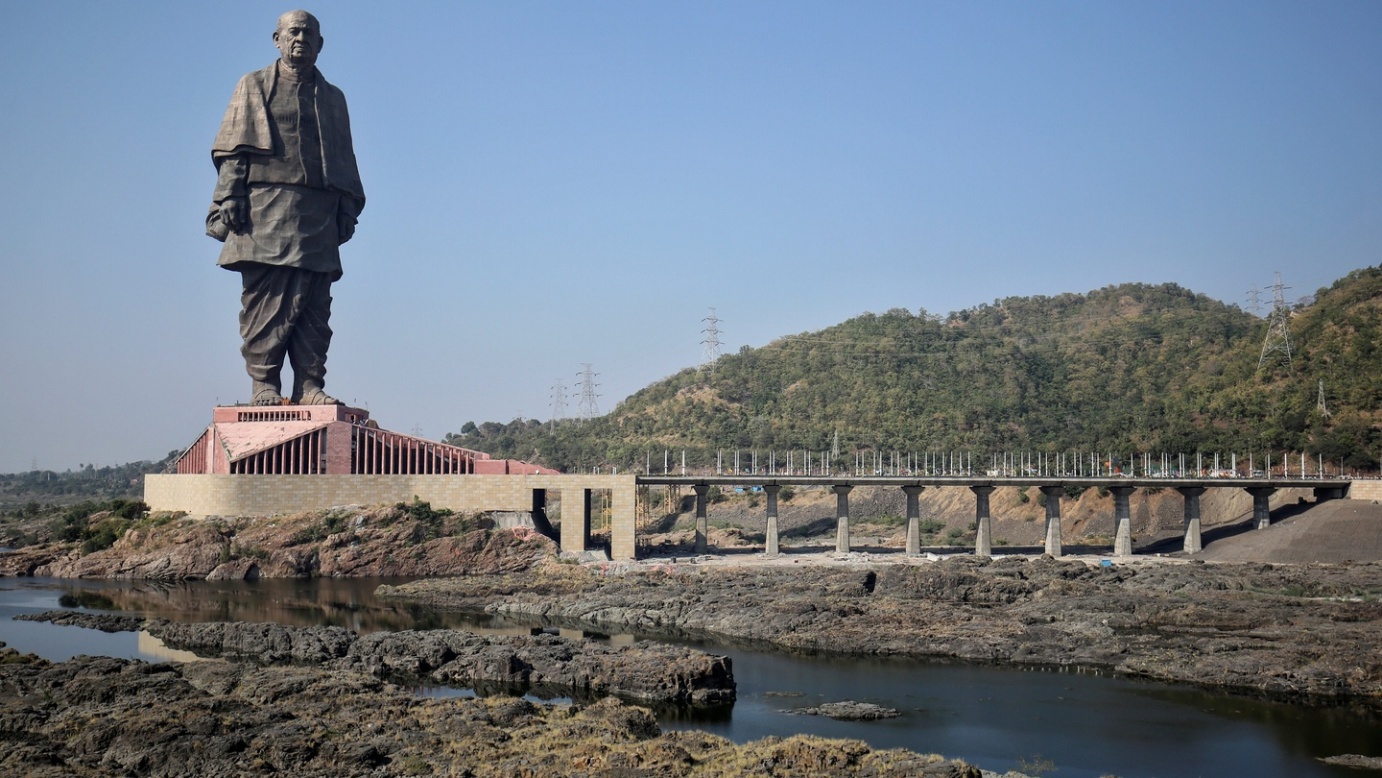
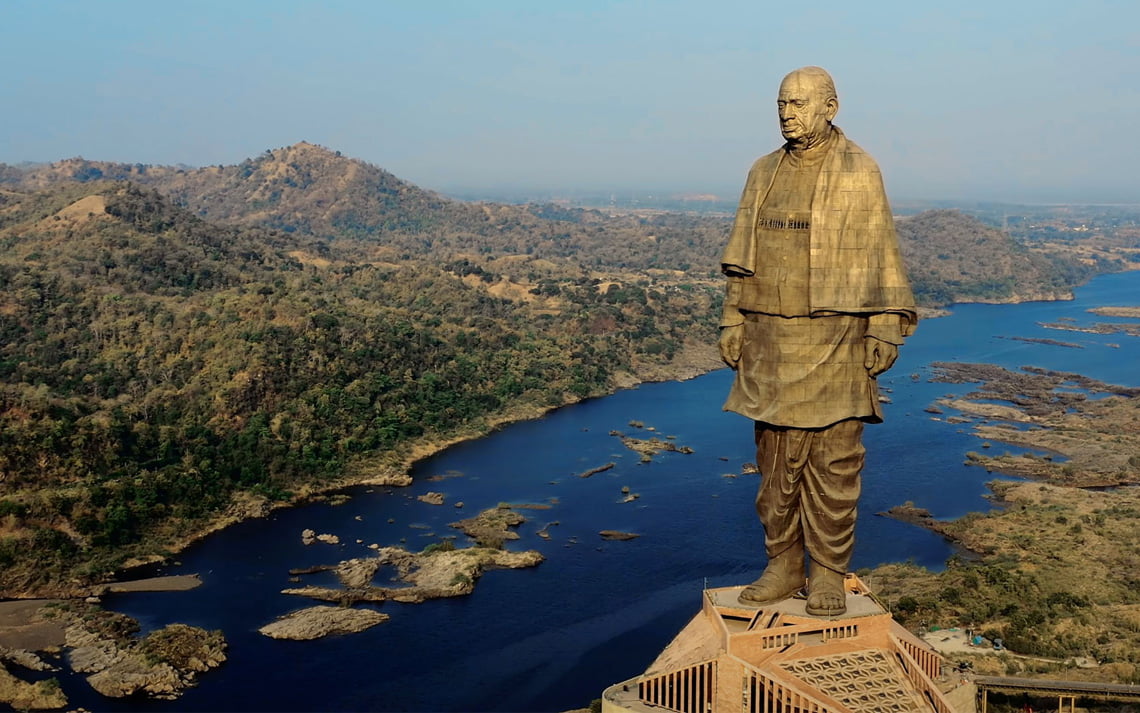
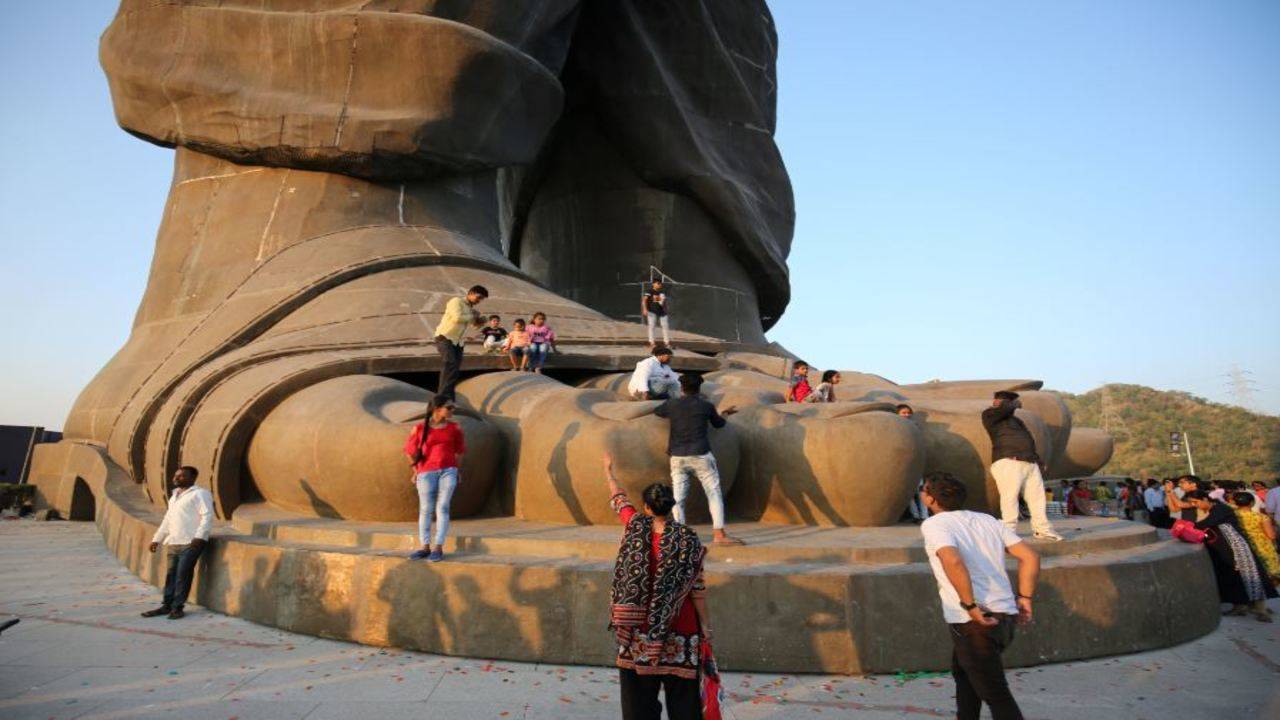
On October 30, 2018, Prime Minister Narendra Modi inaugurated the colossal Statue of Unity—a towering tribute to Sardar Vallabhbhai Patel, facing the Narmada Dam in Gujarat. Standing nearly 600 feet tall on the river island of Sadhu Bet, the statue has been hailed as the world’s tallest. Conceived in December 2013 and executed by Larsen & Toubro at a cost of nearly ₹3,000 crore, it stands as a feat of engineering and ambition. Yet, beneath its grandeur lies a complex tale of politics, identity, and symbolism. Though projected as a people’s project built through small contributions, the financing largely came from public sector units and corporations, many of whom were “encouraged” to donate. The bronze cladding, imported from China, and the presence of Chinese laborers underscore the irony of a monument meant to celebrate Indian self-reliance and nationalism.
The statue, while commemorating Sardar Patel’s legacy, also represents Narendra Modi’s effort to appropriate that legacy for his political narrative. In choosing Patel over ideologues like Deendayal Upadhyaya or Guru Golwalkar, Modi sought to ground his leadership in the mainstream nationalist tradition rather than the narrower ideological lineage of the RSS. Patel, after all, was the architect of India’s unity, the “Iron Man” who consolidated over 560 princely states. Yet, his historical relationship with the RSS was one of deep distrust. In a 1948 letter to Shyama Prasad Mukherjee, Patel held the RSS partly responsible for the atmosphere that led to Gandhi’s assassination, describing its activities as a “clear threat to the existence of the Government and the State.”
Adbhut Brand Studio | Utsav
advertisement

advertisement

The contest over Patel’s legacy has since ignited a bitter political tug-of-war between the BJP and the Congress. Modi’s narrative suggests that Patel was the Congress’s true choice for Prime Minister in 1947, with Nehru imposed upon the party. The truth, however, is more nuanced. While Patel was admired for his organizational acumen, Nehru’s charisma and mass appeal made him the natural choice. Both men differed ideologically—Patel favored realism and free-market principles, while Nehru envisioned socialist planning and internationalism—but their mutual respect and shared patriotism remained unshaken. Their partnership exemplified civility and restraint in political discourse—virtues increasingly absent in today’s polarized climate.
Ironically, Patel’s own party, the Congress, largely marginalized his legacy after his death. Under Nehru and later Indira Gandhi, the Congress turned decisively socialist, sidelining Patel’s pragmatic nationalism. Only when Modi sought to claim Patel as a symbol of his own political identity did the Congress attempt to rediscover him. Yet this revival often rings hollow, divorced from Patel’s ideals of discipline, integrity, and public service.
Today, the Statue of Unity stands not merely as an engineering marvel but as a mirror reflecting India’s political contradictions. It celebrates a leader who united the nation, yet it has become a tool in a politics that often divides it. Sardar Patel belonged to an era when politics was a vocation of principle; his legacy, now draped in competing ideologies, calls us to remember that unity is not built from stone and bronze, but from truth, inclusiveness, and respect for difference.