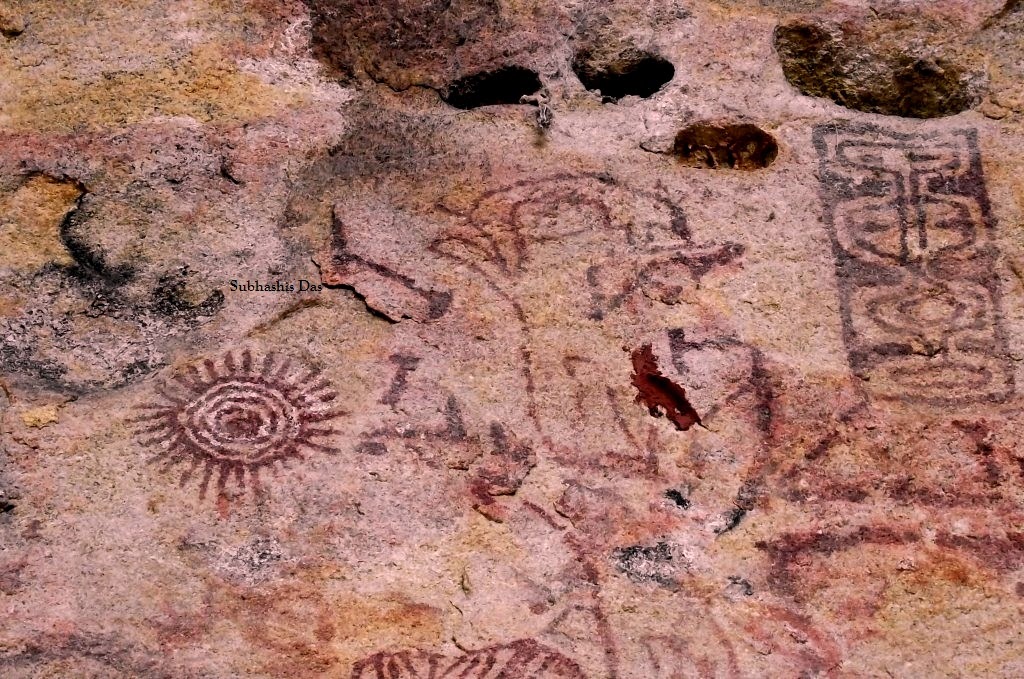
Hidden deep within the rugged hills of Barkagaon, near Hazaribagh in Jharkhand, lies a treasure of humanity’s earliest expressions — the Isco Rock Shelter. This ancient site, accessible either through the bustling lanes of Hazaribagh town or the breathtaking Patratu Valley route, offers more than a glimpse into prehistoric life. Archaeologists trace these rock paintings to the end of the Ice Age, around 9000–5000 BCE, marking the dawn of agriculture in India. Belonging to the Mesolithic or early Neolithic period, the shelter’s paintings align stylistically with sites like Bhimbetka in Madhya Pradesh, featuring red silhouette figures of animals and humans — yet, the mysteries within Isco’s walls go far beyond mere art.
One of the most captivating images is that of a woman in childbirth, a rare and profound depiction of fertility and creation. This scene, possibly symbolizing the veneration of women as life-givers, connects the shelter’s artists to universal human themes of birth and continuity. Nearby, three vertically aligned figures appear to wear helmet-like headgear, resembling modern “space suits.” While this may well be the creative imagination of early humans, such depictions spark fascinating questions — were these ancient artists only reflecting ritual and myth, or could they have conceived notions of beings beyond their world? Whether symbolic or speculative, these figures bridge myth, art, and the eternal human urge to explain the unknown.
Adbhut Brand Studio | Utsav
advertisement

advertisement

The shelter’s walls also abound with images of snakes and masked figures, pointing toward sacred rituals or early forms of shamanism. One masked figure clutching a snake-like staff suggests a ceremonial act — perhaps invoking protection, fertility, or transformation. The snake, in many ancient cultures, embodies life, death, and renewal, and its repeated portrayal here hints at its central place in the spiritual life of these prehistoric inhabitants. The sheer scale of some serpents painted across the rock amplifies their symbolic power, making Isco a sacred canvas of myths now fading under the touch of time.
Visiting Isco is an emotional and almost mystical experience. The shelter reveals itself only after a short climb, and as one descends the rough steps, the paintings emerge — vivid yet fragile. The geometric signs, animal motifs, birds, and human figures narrate a world once alive with ritual and survival. Standing before them, one feels a connection to those who lived amid dense forests, worshiped nature, and chronicled their lives on stone. A faint streambed nearby suggests that life once thrived around water, binding art and ecology in a prehistoric symphony.

Yet, despite its historical and artistic significance, the Isco Rock Shelter remains neglected. There has been no initiative from the Archaeological Survey of India (ASI) or the Jharkhand Government to safeguard this site. With each passing season, erosion steals fragments of our collective heritage. It is time for urgent preservation — not merely as a regional relic, but as a vital chapter in the story of human civilization. The stones of Isco still whisper; it is our responsibility to ensure they are heard by generations to come.