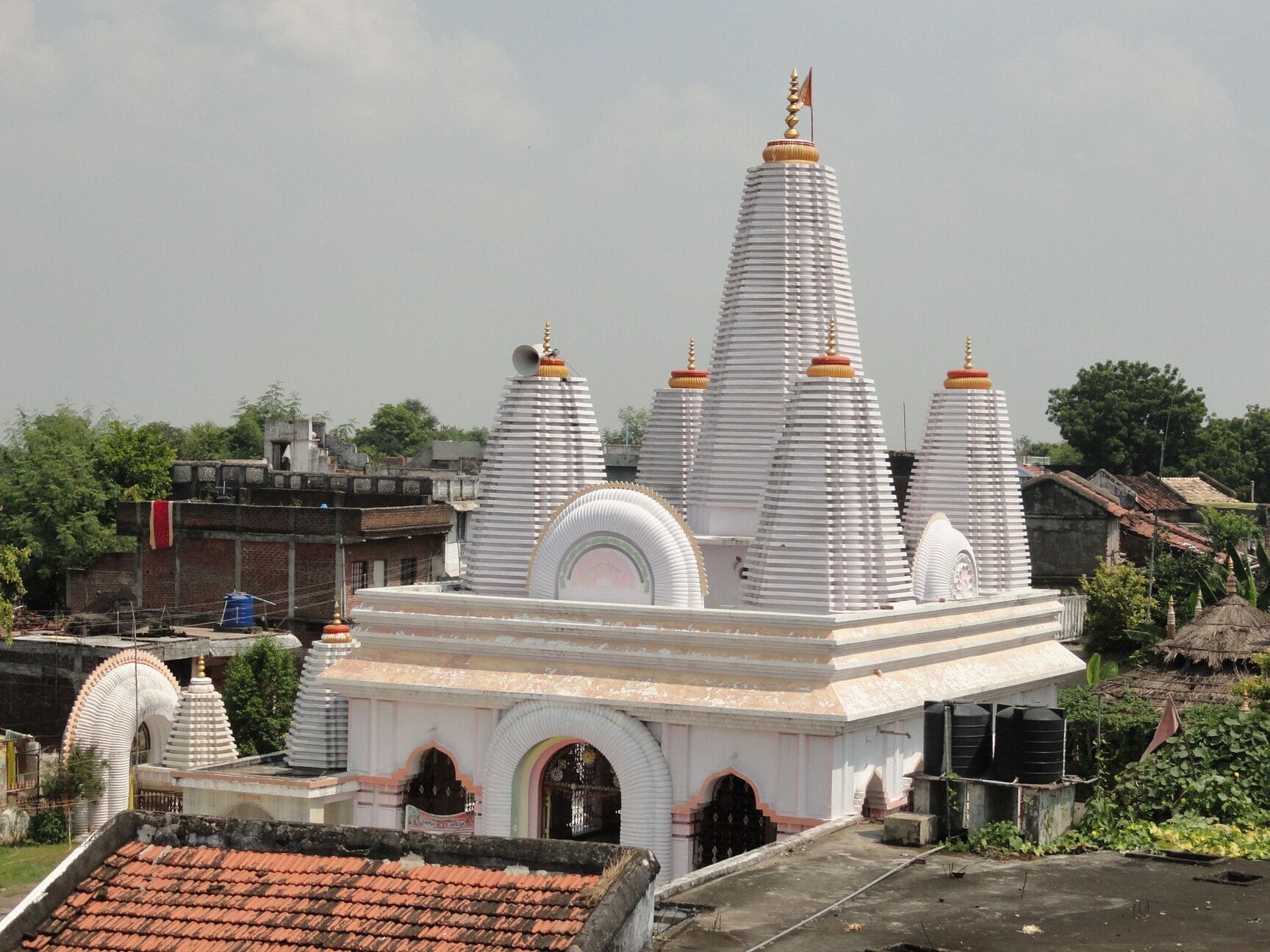
Nestled in the historic heart of Mehrauli, close to the majestic Qutub Minar, the Yogmaya Temple stands as the oldest surviving shrine in Delhi — a living relic from the pre-Christian era. Revered as a Siddhapeeth, this sacred temple is dedicated to Goddess Yogmaya, who embodies the ancient power of Matrika Ekānanshā, the “One without parts” — the non-dual and complete Supreme Truth. Her sanctum holds not only spiritual grandeur but also echoes of civilizational memory that reaches back to the dawn of Indian faith and philosophy.
In the Indus Valley Civilization, Yogmaya was venerated in the form of the single-horned unicorn, a powerful symbol of unity and divine completeness. Scriptures identify her with Vindhyavasini, the goddess who slew the demons Shumbha and Nishumbha, as celebrated in the Shri Shri Chandi. The Mahabharata extols her as the goddess worshipped by Yudhishthira and Arjuna for victory in battle, and the Harivamsha’s Arya-Stava praises her cosmic power. The epic further describes her in multiple divine aspects — as Gopendra’s elder sister born in Nanda Gopa’s house, as Durga who drank the blood of the buffalo demon, and as Kumari Kali Kapali, merging the powers of both Shiva and Shakti in one.
Adbhut Brand Studio | Utsav
advertisement

advertisement

In the mystic traditions of Vaishnava rasa-tattva, Yogmaya is revered as the divine orchestrator of Radha-Krishna’s leelas, the presiding deity of the Rasamandala, and the ruler of all Yoginis. From her name, the ancient Mehrauli region once derived its title Yoginipur, signifying the land of Yoginis. Historical records and legends reveal that this area once housed 27 Hindu and Jain temples, many of which were destroyed during medieval invasions. The Yogmaya Temple, however, survived — originally established in the 3rd century BCE, during the Gangaridai period, making it one of the most enduring sacred sites in Indian history.
Through centuries of turmoil, the temple witnessed destruction and rebirth. The Hindu emperor Hemu is said to have briefly restored it before it was demolished again. Later, during the waning years of the Mughal Empire, the chief queen of Akbar III dreamt of the goddess in a vision of deliverance. Following her divine encounter, the temple was reconstructed and worship was reinstated — a testimony to Yogmaya’s undying spiritual force. According to a cherished legend, when Vasudeva exchanged infant Krishna with Yogmaya in Kamsa’s prison, the goddess manifested as Ashtabhuja Durga, vanished into the heavens, and divided her divine essence. Her head became enshrined here, at Yogmaya Peeth, on the ancient Aravalli ridge.
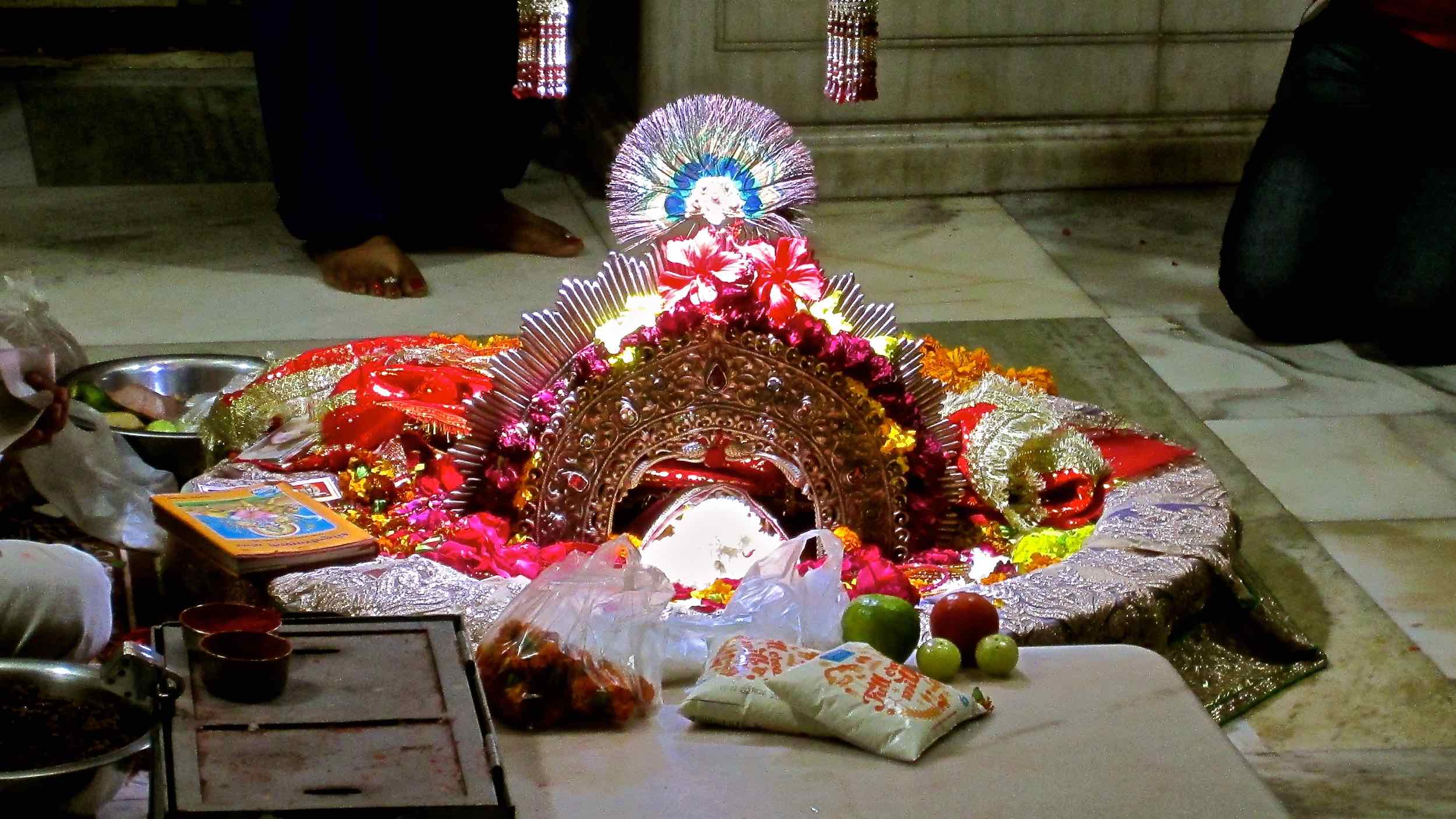
This legend offers profound insight into the origins of Shakti Peethas. Long before the myth of Sati’s fragmented body, there existed a ritual in the Indus Valley and at Pandu Raja Dhibi, where parts of bodies were buried separately — symbolizing the spread of divine presence. Such traditions inspired both Hindu Peethas and Buddhist stupas, each sanctifying fragments of the sacred. Thus, the Yogmaya Temple stands not merely as one of the 51 Sati Peethas, but as a remembrance of a deeper, older Mother-Goddess worship. The present 19th-century structure, with its sanctum enshrining a stone face of the goddess adorned with a silver mask, continues to draw pilgrims and seekers alike — an eternal light of faith amidst the ruins and rhythms of Delhi’s timeless past.